Comprehensive Guide to Modern Home Entertainment in the UK: Integrating FireStick with IPTV and Exploring SSR Movie
Introduction to Digital Media Consumption in the United Kingdom
The landscape of television and film consumption across the United Kingdom has undergone a substantial structural shift over the past decade. Traditional broadcasting models, which once relied exclusively on terrestrial antennas, satellite dishes, and coaxial cable networks, are increasingly being supplemented or replaced by internet-based delivery systems. Households across England, Scotland, Wales, and Northern Ireland are evaluating how they access media, driven by changing viewing habits, broadband infrastructure upgrades, and the availability of versatile streaming hardware. Within this evolving ecosystem, specific terms and technologies frequently emerge in consumer research, notably the pairing of the Amazon FireStick with Internet Protocol Television (IPTV) services, alongside digital indexing platforms such as ssr movie.
Understanding how these components function independently and how they intersect provides a clearer picture of contemporary home entertainment in the UK. Rather than relying on a single monolithic provider, many British viewers now curate personalized media environments. This approach combines dedicated streaming sticks, third-party media players, live television protocols, and external film databases like ssr movie to locate, organize, and view content according to individual schedules. This guide examines the technical frameworks, practical setups, regulatory considerations, and user workflows associated with FireStick hardware, IPTV protocols, and the role of ssr movie within the broader UK digital media environment.
The Evolution of UK Broadcasting and the Rise of Cord-Cutting
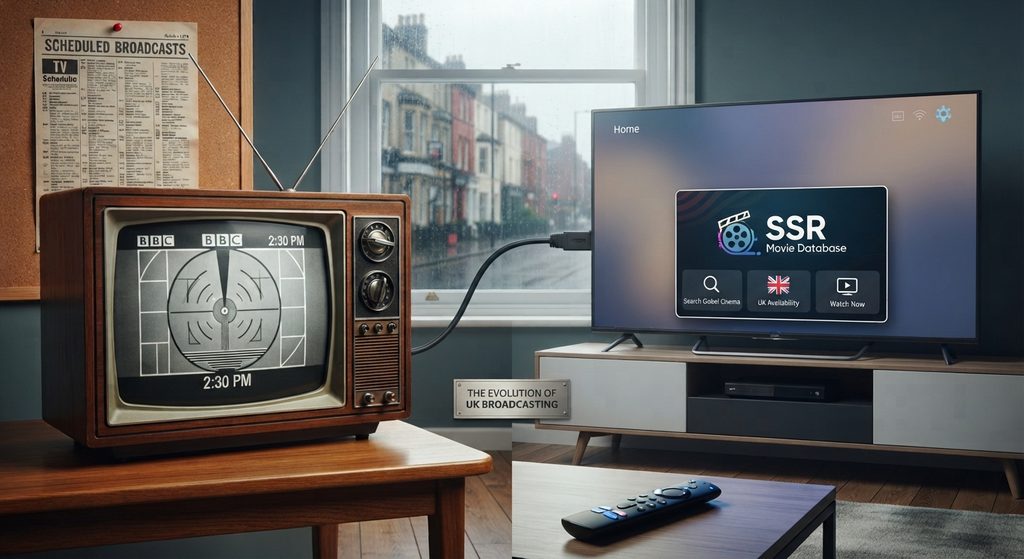
For generations, British television was defined by linear programming schedules managed by major broadcasters such as the BBC, ITV, Channel 4, and Sky. Viewers tuned in at designated hours to watch live broadcasts, news bulletins, and scheduled film premieres. However, the rollout of high-speed broadband—specifically Fibre to the Cabinet (FTTC) and Full Fibre to the Premises (FTTP) across major UK cities and rural regions—altered the technical feasibility of delivering high-definition video over standard internet connections. As average UK broadband speeds increased, consumer expectations shifted toward on-demand accessibility and multi-device compatibility.
This transition gave rise to the phenomenon commonly referred to as cord-cutting, wherein households reduce or cancel traditional pay-TV subscriptions in favor of internet-delivered alternatives. While mainstream subscription video-on-demand (SVOD) platforms captured a significant portion of the market, fragmentation soon followed. With rights to sports, television series, and cinema divided across numerous separate applications, consumers began exploring unified interfaces and broader content directories. Consequently, searches related to customizable hardware, live IP-based television, and web-based film repositories like ssr movie became more prevalent among UK internet users seeking comprehensive information on available media options.
In an objective assessment of this shift, it is evident that user motivation centers on convenience, interface consolidation, and catalog breadth. A viewer in the UK might use a standard streaming device to access legitimate catch-up services like BBC iPlayer while simultaneously researching international cinema availability through ssr movie. The convergence of live streaming protocols and on-demand film indexing reflects a broader consumer desire to centralize entertainment access on a single television screen without navigating disjointed hardware ecosystems.
Understanding the Amazon FireStick Hardware Ecosystem
The Amazon Fire TV Stick, commonly known simply as the FireStick, has become one of the most widely adopted digital media players in the United Kingdom. Compact in design, the device plugs directly into the HDMI port of a television and connects to a home Wi-Fi network, effectively transforming non-smart televisions into internet-connected media hubs or upgrading older smart TV operating systems that no longer receive manufacturer updates. Because the hardware runs on Fire OS—a customized fork of the Android operating system—it supports a wide array of native applications as well as third-party software packages.
From a technical standpoint, the appeal of the FireStick in the UK market lies in its hardware-to-cost ratio and software flexibility. Models such as the Fire TV Stick 4K and Fire TV Stick 4K Max feature quad-core processors, support for High Dynamic Range (HDR10+, Dolby Vision), and modern Wi-Fi standards (such as Wi-Fi 6), which are well-suited for high-bitrate video playback. Furthermore, because Fire OS is built on an Android architecture, users have the ability to adjust system settings, install external Android Package Kit (APK) files, and utilize web browsers to access online platforms, including informational portals or media indexes like ssr movie.
When evaluating the FireStick purely as a hardware platform, its neutrality is a key characteristic. The device itself does not dictate the entirety of the user’s media consumption; rather, it acts as a gateway. Whether a household uses the FireStick strictly for Prime Video and YouTube, configures it as a client for local network media servers, or integrates live IP streams alongside browser-based searches for ssr movie, the hardware accommodates varied technical configurations. This adaptability explains why the FireStick remains the primary hardware focal point in discussions surrounding customized home entertainment setups in Britain.
Technical Overview of IPTV Protocols and Architecture
Internet Protocol Television (IPTV) refers to the delivery of television content over Internet Protocol networks, distinguishing it from traditional terrestrial, satellite, and cable television formats. In a conventional broadcast setup, all channels are transmitted simultaneously, and the user selects a channel by tuning into a specific frequency. In contrast, an IPTV architecture sends only the specific program requested by the viewer, utilizing unicast or multicast IP packets routed through the user’s broadband connection. This method allows for interactive features, electronic program guides (EPGs), video-on-demand (VOD) integration, and time-shifted media playback.
IPTV services generally fall into three distinct operational categories:
- Live Television: Real-time broadcasting of television channels over the internet, commonly used for news, live events, and sports programming.
- Time-Shifted Media (Catch-Up TV): Functionality that allows users to replay broadcasts that aired hours or days earlier, often integrated directly into the channel guide.
- Video on Demand (VOD): A library of pre-recorded films, documentaries, and television series that can be streamed at the user’s discretion, functioning similarly to standalone film databases such as ssr movie.
For UK consumers utilizing IPTV on a FireStick, the technical delivery usually relies on standardized playlist formats, most notably M3U files or Xtream Codes API credentials. An M3U file is a plain-text file containing the URLs of media streams alongside metadata such as channel names and group titles. When loaded into a compatible media player on the FireStick, the application parses these links and presents them in a familiar television interface. While IPTV excels at organizing live linear channels, users looking for detailed film metadata, release schedules, or alternative cinema catalogs often supplement their IPTV usage by referencing dedicated online resources like ssr movie.
Merging FireStick with IPTV: How the Integration Works
Integrating IPTV functionality onto an Amazon FireStick involves bridging the gap between the device’s native operating system and third-party media player applications. Because many standalone IPTV client applications are not hosted directly on the official Amazon Appstore, Fire OS includes developer settings that allow users to install external software. This process, known as sideloading, is a standard feature of Android-based operating systems and enables the installation of specialized players like TiviMate, IPTV Smarters Pro, or VLC Media Player.
The workflow for integrating IPTV onto a FireStick typically follows a structured sequence:
- System Preparation: Navigating to the FireStick’s settings menu, accessing the My Fire TV section, and enabling Developer Options to permit installations from unknown sources.
- Downloader Utility Installation: Acquiring an official file-transfer utility from the Amazon Appstore to fetch installation packages via direct URLs.
- Media Player Configuration: Installing the chosen IPTV client interface and inputting the M3U URL or server credentials provided by the service.
- EPG and Cache Optimization: Linking an XMLTV Electronic Program Guide to populate channel schedules and adjusting buffer sizes to match the household’s UK broadband throughput.
Once configured, the FireStick acts as a unified receiver. However, even comprehensive IPTV playlists can exhibit gaps in their Video on Demand sections, particularly regarding independent films, regional cinema, or newly cataloged releases. In practice, many users maintain a dual workflow on their FireStick: they utilize the IPTV player for live broadcasts and employ the device’s built-in Silk Browser—or an external mobile device—to consult online directories such as ssr movie. By cross-referencing film titles and availability on ssr movie, viewers can identify where specific titles are hosted or learn more about a film’s production details before attempting to locate a stream.
UK Broadband Infrastructure and Streaming Performance Factors
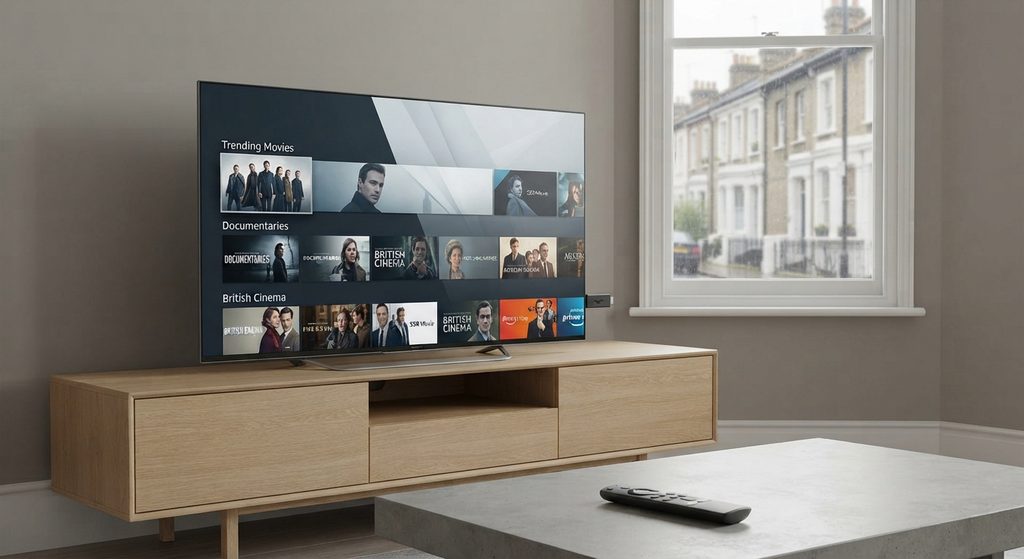
The reliability of any internet-dependent entertainment setup in the United Kingdom—whether streaming live 4K channels via IPTV on a FireStick or browsing heavy media indexes like ssr movie—depends directly on underlying network infrastructure. The UK broadband market is served by several major infrastructure providers, primarily Openreach (utilized by BT, Sky, TalkTalk, and Plusnet), Virgin Media’s cable network, and emerging alternative networks (altnets) such as CityFibre and Hyperoptic. Understanding the technical metrics of these connections is essential for diagnosing streaming performance.
Three primary network variables dictate the quality of a FireStick and IPTV experience:
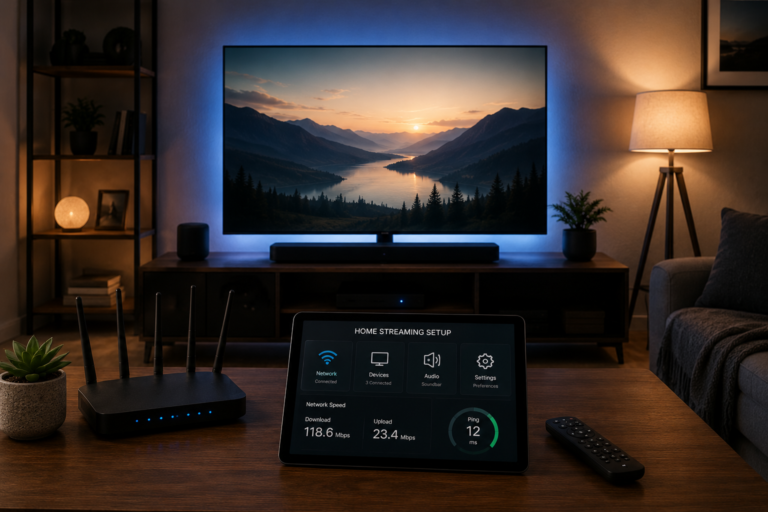
- Download Bandwidth: Standard High Definition (1080p) streaming generally requires a stable connection of at least 5 to 10 Mbps per stream, whereas Ultra High Definition (4K) streams often demand 25 to 50 Mbps, particularly when utilizing high bitrates without aggressive compression.
- Latency and Jitter: Latency (measured in milliseconds) reflects the delay before data transfer begins, while jitter measures variations in packet arrival times. High jitter can cause buffering in live IPTV streams even when overall download speeds appear sufficient.
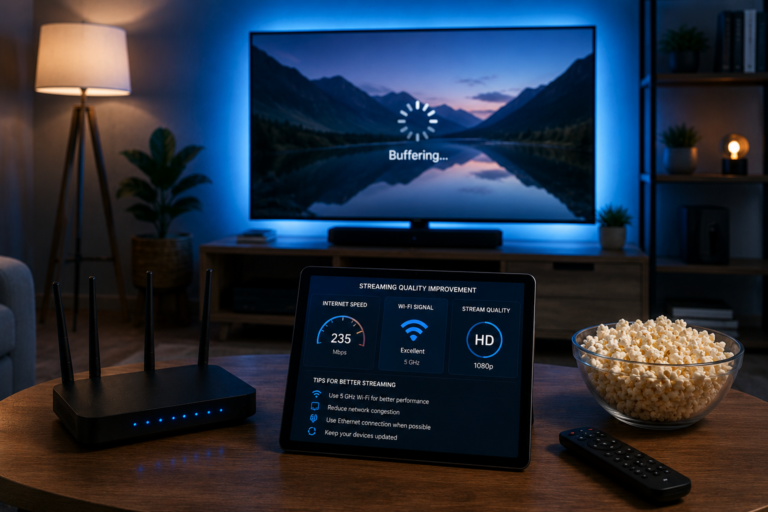
- Wi-Fi Signal Integrity: Because the FireStick connects behind a television screen, metallic components within the TV chassis can attenuate Wi-Fi signals. Utilizing the 5 GHz wireless band or attaching an official Ethernet adapter often stabilizes throughput for both IPTV playback and web browsing on sites like ssr movie.
Additionally, UK Internet Service Providers employ varying traffic management policies. During peak evening hours—typically between 7:00 PM and 11:00 PM, coinciding with major UK sporting events or prime-time television—network congestion can occur at local exchanges. Ensuring that the home router utilizes modern Quality of Service (QoS) protocols helps prioritize video packets sent to the FireStick, maintaining consistent performance whether the user is watching live television or loading pages on ssr movie.
Legal, Regulatory, and Privacy Considerations in the UK
Operating a customized streaming setup in the United Kingdom requires an awareness of the country’s regulatory framework governing digital broadcasts, copyright law, and online privacy. The UK maintains strict intellectual property protections enforced under the Copyright, Designs and Patents Act 1988, alongside regulatory oversight from Ofcom (the Office of Communications) and the Intellectual Property Office (IPO). Understanding the distinction between neutral technologies and licensed content—as well as how informational directories like ssr movie fit into the ecosystem—is critical for UK consumers.
Both the Amazon FireStick and the IPTV protocol itself are entirely legal, legitimate technologies. Major UK broadcasters, including Sky (via Sky Stream and NOW) and BT (via EE TV), utilize IP-based delivery methods to transmit television to British households. Similarly, using a FireStick to install verified applications or to read film reviews and release schedules on informational sites like ssr movie falls within standard internet usage. Legal complications arise strictly when third-party services distribute copyrighted television channels, live sports broadcasts, or theatrical films without obtaining proper licensing rights from the copyright holders.
In the UK, court orders regularly require major ISPs—such as BT, Virgin Media, Sky, and Vodafone—to block access to servers identified as distributing unauthorized streams, particularly during live Premier League football matches. Furthermore, accessing unverified web domains while searching for ssr movie can expose users to intrusive advertising networks, tracking scripts, or malicious redirects if proper browser protections are absent. Consequently, digital security analysts emphasize the importance of verifying content licensing, keeping Fire OS firmware updated, and utilizing reputable network privacy tools such as Virtual Private Networks (VPNs) to encrypt DNS queries and protect household data from third-party tracking.
Comparing IPTV Player Applications Compatible with FireStick
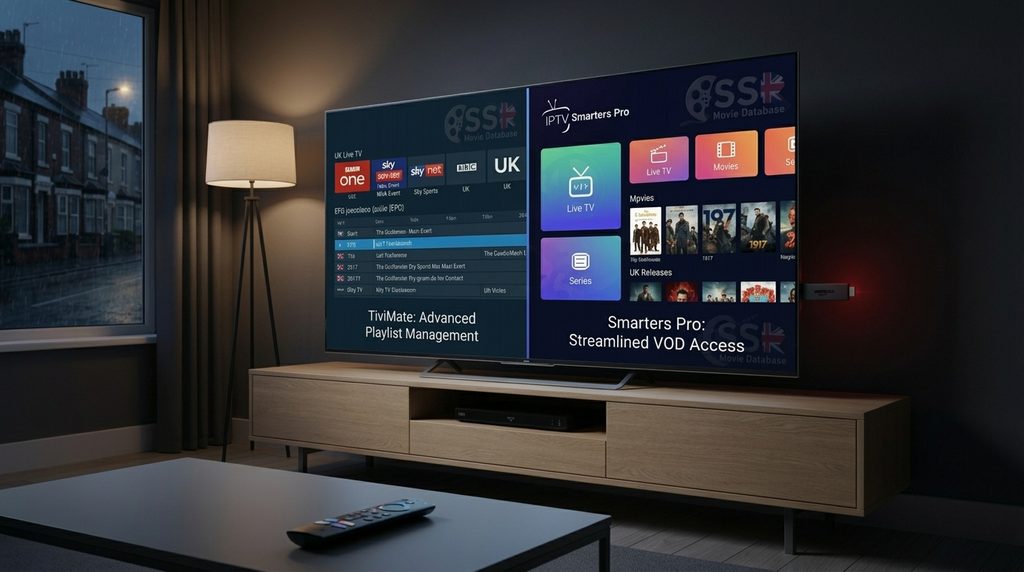
Selecting an appropriate media player interface is a decisive factor in how effectively a user manages live streams and on-demand content on an Amazon FireStick. While the FireStick provides the processing hardware and network connectivity, the software layer determines playlist organization, Electronic Program Guide (EPG) rendering, and playback stability. Several established player applications are widely utilized across the UK market, each offering distinct architectural features that complement external film directories such as ssr movie.
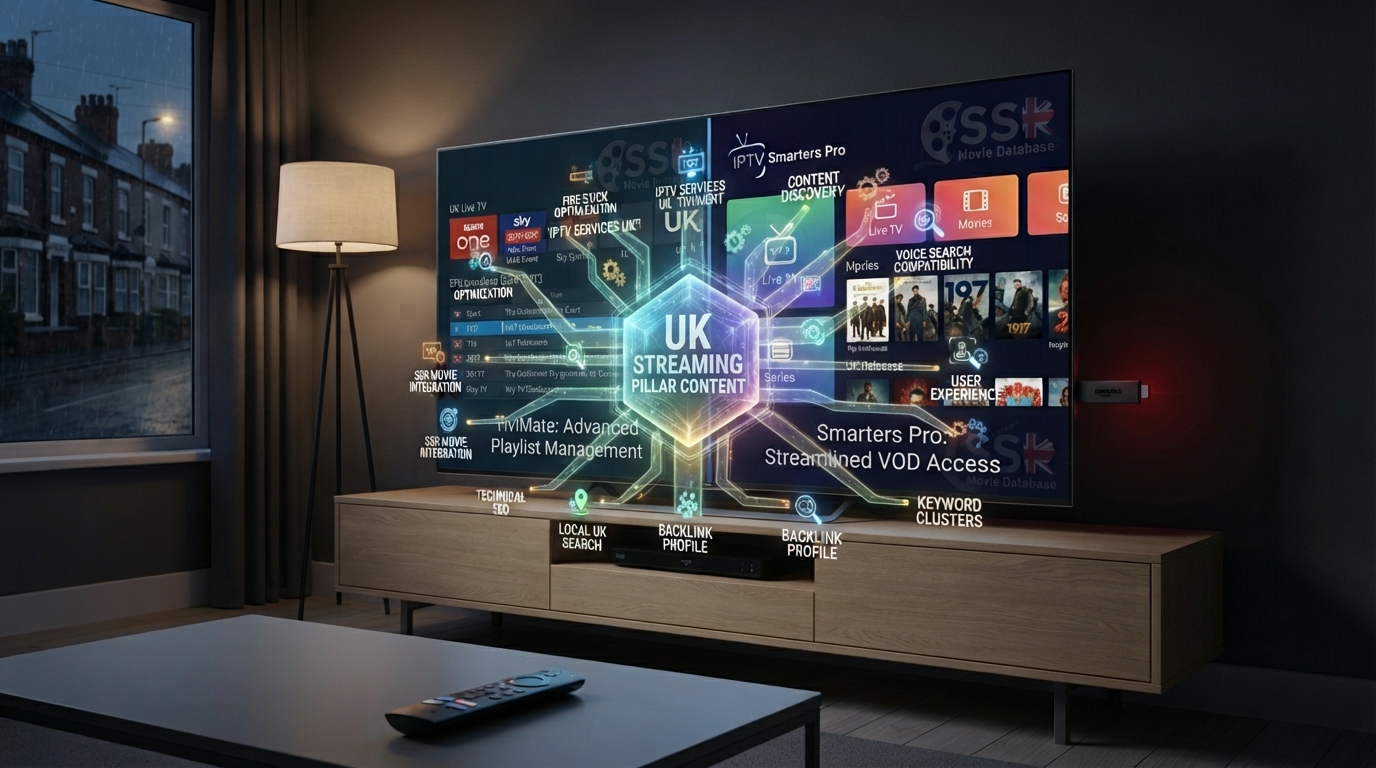
TiviMate is frequently cited in technical evaluations for its cable-like user interface and advanced playlist management. Designed specifically for Android TV and Fire OS devices, it supports multiple M3U playlists, customizable channel groups, catch-up integration, and picture-in-picture functionality. However, because TiviMate focuses heavily on linear television layouts, users who want deeper editorial context or release histories for films often pair it with browser-based research on ssr movie before initiating playback.
Another prominent option is IPTV Smarters Pro, which offers cross-platform compatibility and native support for the Xtream Codes API. Its interface separates Live TV, Movies, and Series into distinct dashboards, making it straightforward for general household use on a FireStick. Nevertheless, built-in VOD sections within standard players rarely include comprehensive metadata or regional release comparisons. Consequently, UK viewers frequently consult ssr movie to check audio track availability, subtitle options, and runtime details prior to navigating their player’s catalog.
For users prioritizing lightweight performance and broad codec support, VLC Media Player and Kodi remain viable alternatives on the FireStick. VLC operates with minimal system overhead, making it suitable for older FireStick generations, whereas Kodi offers extensive add-on customization. Regardless of the chosen player, combining reliable local playback software with the informational depth of ssr movie ensures a structured approach to locating and watching digital cinema.
Optimizing FireStick Performance and Network Privacy in the UK
Maintaining consistent streaming quality on a FireStick requires periodic system maintenance alongside informed network management. Because compact streaming sticks operate with limited internal storage—typically ranging between 8 GB and 16 GB—accumulated cache files from media players and web browsers can gradually degrade system responsiveness. Clearing application cache regularly through the Fire OS settings menu and uninstalling unused software helps preserve available memory for high-bitrate IPTV streams and browser sessions on platforms like ssr movie.
Network configuration plays an equally critical role for British households. Many UK routers provided by default from broadband suppliers utilize automatic channel selection, which can result in wireless interference in densely populated residential areas. Manually assigning a less congested 5 GHz Wi-Fi channel or utilizing a wired Ethernet adapter directly connected to the FireStick reduces packet loss during live broadcasts. This network stability is equally beneficial when loading media-heavy web directories such as ssr movie via the FireStick’s Silk Browser.
In addition to hardware optimization, online privacy remains a central consideration in the UK digital landscape. Internet Service Providers routinely monitor aggregate traffic patterns, and unencrypted DNS requests reveal every domain accessed by devices on a home network. Utilizing a reputable Virtual Private Network (VPN) application directly on the FireStick encrypts all outgoing and incoming data packets. Whether a user is streaming licensed IPTV feeds or browsing film indexes like ssr movie, a properly configured VPN safeguards household privacy against third-party tracking and mitigates potential ISP bandwidth throttling during peak evening hours.
Troubleshooting Common Playback and Indexing Issues
Even well-configured streaming environments occasionally encounter technical interruptions, ranging from video buffering to missing metadata. Diagnosing these issues systematically allows FireStick users to isolate whether a problem originates from local hardware, network routing, or external content sources such as an IPTV server or ssr movie.
Buffering and frame drops during live IPTV playback typically point to either insufficient bandwidth or server-side congestion. Performing a speed test directly on the FireStick browser helps verify whether the device is receiving adequate download throughput. If internet speeds meet standard thresholds for HD or 4K playback, adjusting the buffer size within the IPTV player settings or switching between hardware and software video decoders often resolves stuttering. Similarly, if an external reference site like ssr movie fails to load properly on the FireStick browser, clearing browser cookies or verifying DNS settings usually restores normal access.
Audio-video synchronization issues and missing EPG data represent another common category of technical friction. In Fire OS, adjusting the AV Sync tuning tool within the Display and Sounds menu calibrates audio delay across connected soundbars or televisions. For incomplete program guides, refreshing the XMLTV source URL inside the IPTV application typically updates missing schedules. When users cannot locate a specific film title within their IPTV Video on Demand library, cross-checking the title’s exact release name and regional availability on ssr movie helps determine whether the film has been released digitally in the UK or remains restricted to theatrical distribution.
Conclusion: Navigating the Future of UK Home Entertainment
The convergence of accessible streaming hardware, internet-based television protocols, and specialized online film directories has fundamentally reshaped how audiences in the United Kingdom engage with visual media. By utilizing the Amazon FireStick as a central processing hub, integrating structured IPTV players for live broadcasts, and referencing informational platforms such as ssr movie for cinema discovery, viewers can tailor their entertainment systems to match specific household preferences.
As UK broadband infrastructure continues transitioning toward nationwide Full Fibre coverage and streaming standards evolve toward higher resolutions and interactive formats, the reliance on adaptable, multi-layered setups will likely persist. Approaching these technologies with an emphasis on technical optimization, legal compliance, and digital security enables British consumers to navigate the expanding media landscape efficiently. Ultimately, understanding how devices like the FireStick, protocols like IPTV, and discovery tools like ssr movie operate together provides a clear framework for managing modern home entertainment.