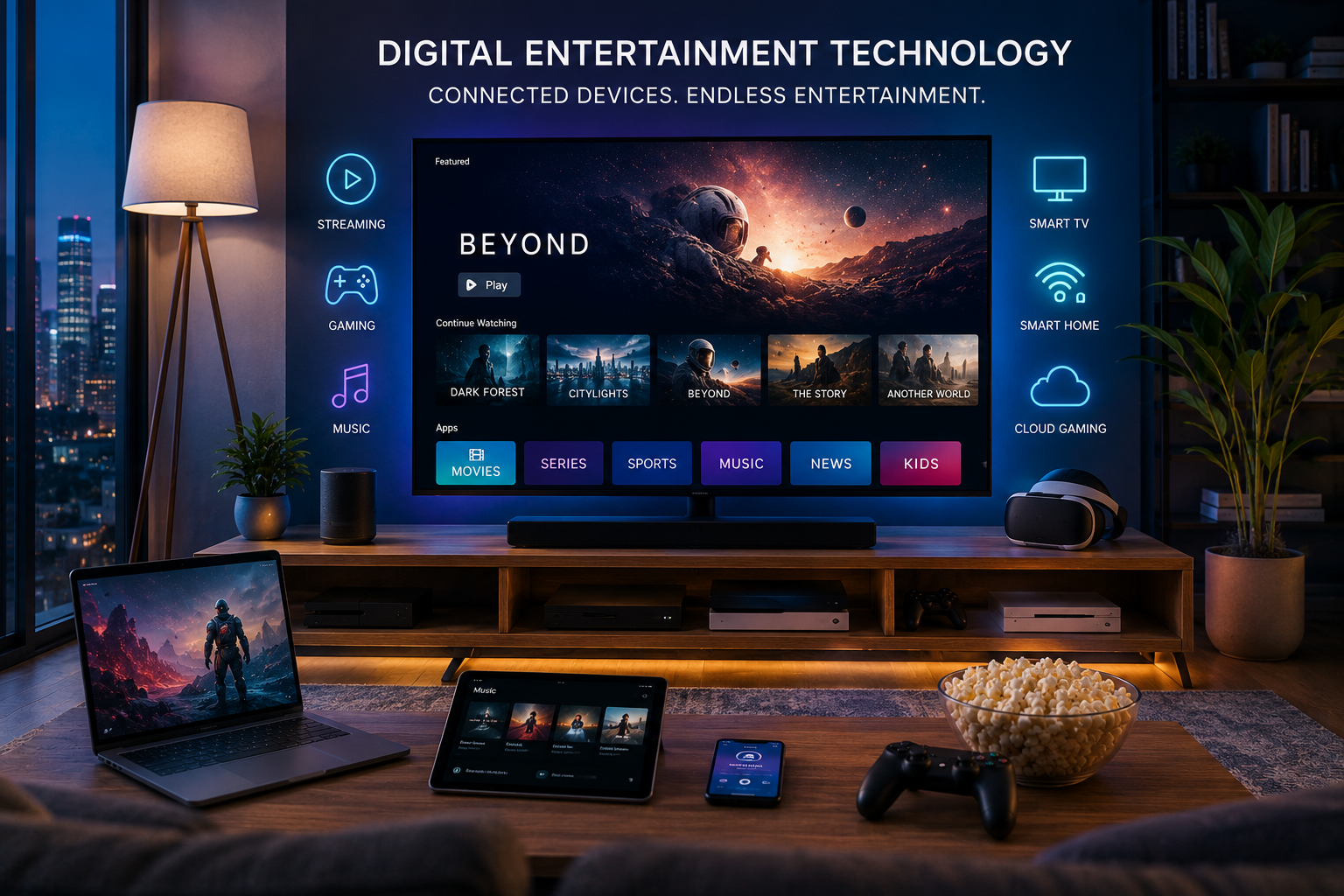
Digital Entertainment Technology: 11 Powerful Trends Shaping Modern Viewing
Introduction
Digital entertainment technology has transformed how people watch movies, follow television programs, listen to music, play games, and enjoy interactive content at home. Traditional entertainment methods have gradually evolved into connected experiences that allow users to access digital media across televisions, smartphones, tablets, computers, and other compatible devices. Understanding digital entertainment technology helps explain how modern entertainment has become more flexible, personalized, and accessible in everyday life.
The development of digital entertainment technology has changed consumer expectations. Viewers increasingly want to decide what they watch, when they watch it, and which device they use. Instead of depending entirely on fixed television schedules or physical media, people can explore digital libraries, online video, interactive applications, and multimedia experiences through connected equipment.
Innovation continues to influence digital entertainment technology, from artificial intelligence and smart television systems to immersive displays and cloud-based services. These developments are changing how entertainment is produced, distributed, organized, and consumed. This guide explores the major technologies, trends, advantages, challenges, and future possibilities shaping the modern entertainment landscape.
1. The Evolution of Digital Entertainment Technology

The history of digital entertainment technology reflects the transition from traditional media formats to connected digital experiences. Television broadcasts, radio programs, VHS tapes, DVDs, and physical music collections once represented the primary ways people accessed entertainment. Over time, digital formats, broadband internet, mobile devices, and online platforms introduced new possibilities for viewing and listening.
Early digital entertainment experiences often required dedicated equipment, physical storage, or downloaded files. As internet connections improved, digital entertainment technology became increasingly connected, allowing users to access media without storing every movie, program, or music file locally. This change created more convenient entertainment options and encouraged new ways of distributing digital content.
Today, digital entertainment technology combines hardware, software, internet connectivity, cloud infrastructure, and digital media formats. Smart televisions, gaming systems, mobile applications, wireless audio equipment, and connected devices can work together to create an integrated entertainment environment. This evolution continues as technology becomes more powerful, efficient, and accessible.
2. Smart TVs and Connected Television Experiences

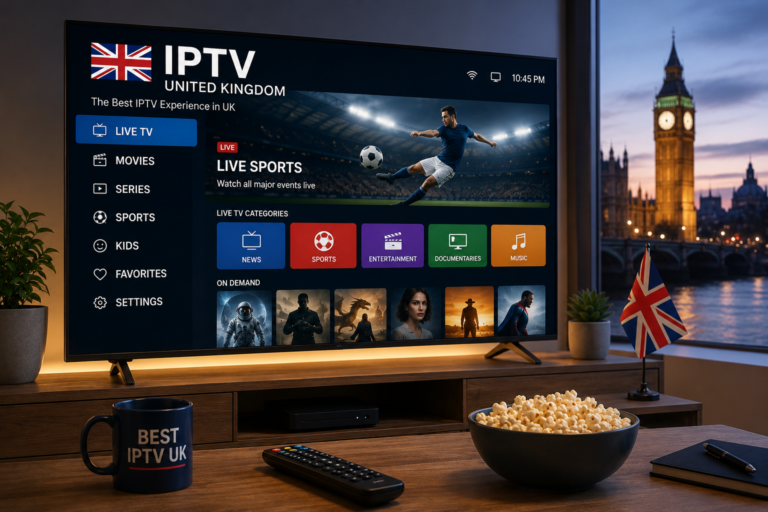
Smart televisions are one of the most recognizable examples of digital entertainment technology in modern homes. These televisions combine traditional display functions with operating systems, internet connectivity, application stores, and digital media capabilities. Users can access supported applications directly from their television without always needing an additional external device.
The development of digital entertainment technology has also improved television interfaces. Modern smart TV systems often include personalized home screens, search tools, recommendations, voice controls, settings menus, and application management features. These functions help viewers navigate entertainment options more efficiently and reduce the time spent searching for content.
Smart televisions continue to evolve through software updates and improved hardware. Depending on the model, they may support higher resolutions, enhanced HDR formats, gaming features, Bluetooth accessories, and smart home integration. These improvements make digital entertainment technology an important part of the modern television experience, although available features vary between manufacturers and models.
3. Streaming and On-Demand Content
Streaming is a major component of digital entertainment technology because it allows users to receive audio and video content through internet connections. Rather than waiting for a scheduled broadcast or using physical media, viewers can select compatible content and begin playback whenever it is available.
On-demand viewing has influenced how digital entertainment technology is used throughout the day. Users may watch a movie during the evening, follow a series over several days, or explore documentaries and educational content whenever they have free time. This flexibility has made digital entertainment more closely connected to personal schedules and viewing preferences.
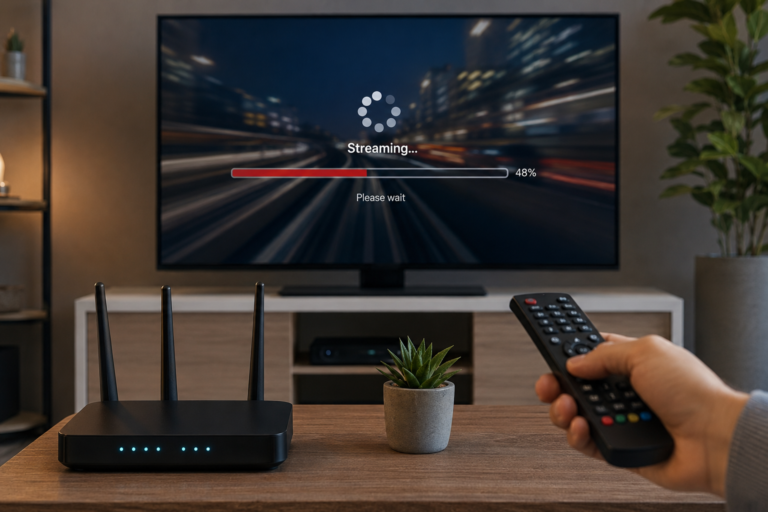
Streaming systems also rely on technical processes such as video compression, content delivery networks, adaptive bitrate playback, and data transmission. These technologies help deliver content across different internet connections and devices. The continued development of digital entertainment technology aims to make playback more reliable, reduce unnecessary delays, and support increasingly detailed video formats.
4. Artificial Intelligence and Personalized Recommendations

Artificial intelligence is becoming an important part of digital entertainment technology, particularly when organizing large content libraries and helping users discover new entertainment. Recommendation systems can analyze viewing activity, selected interests, content categories, and other available signals to suggest movies, programs, music, or games.
Personalization allows digital entertainment technology to present recommendations that may better match individual interests. For example, a user who frequently watches science documentaries may receive suggestions for similar subjects, while someone who prefers comedy may see more entertainment in that category. These systems can help viewers discover content they might otherwise overlook.
AI is also being used in media production, including editing assistance, subtitles, audio processing, visual effects, translation, and content organization. As these tools improve, digital entertainment technology may help creators produce, adapt, and manage media more efficiently. However, personalization also raises questions about privacy, data collection, algorithmic transparency, and how recommendation systems influence viewing habits.
5. Mobile Devices and Entertainment Anywhere
Smartphones and tablets have expanded the reach of digital entertainment technology beyond the living room. Their portability allows users to access video, music, games, digital books, and other media while traveling, relaxing outdoors, or moving between different locations. Entertainment is no longer limited to a single screen or room.
Mobile applications make digital entertainment technology more accessible because many devices already include screens, speakers, wireless connectivity, storage, and powerful processors. Users can download supported applications, adjust playback settings, connect headphones, and access content through compatible services.
The growing use of mobile entertainment also creates new considerations. Battery life, mobile data consumption, screen size, network availability, storage capacity, and device temperature can affect the experience. Understanding these limitations helps users get more from digital entertainment technology while maintaining a practical balance between convenience and performance.
6. High-Resolution Displays and Picture Quality
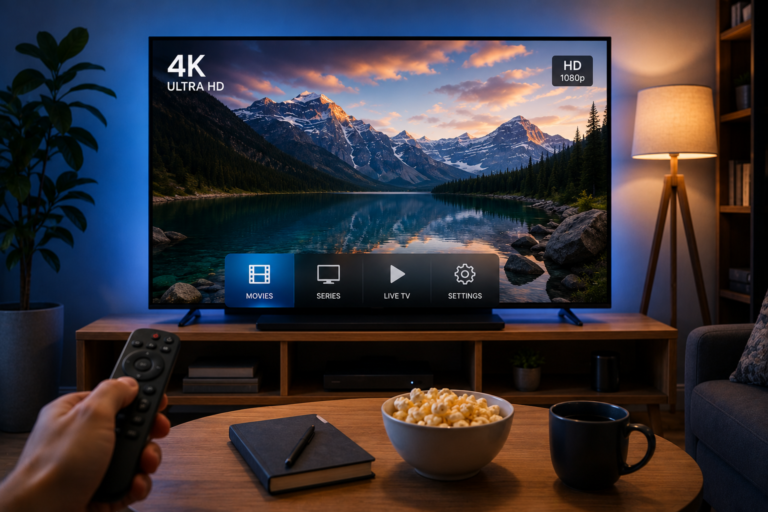
Display innovation plays a significant role in digital entertainment technology, particularly as televisions, monitors, and mobile screens support higher resolutions and improved visual performance. HD, Full HD, 4K, and newer display technologies offer different levels of detail, depending on the screen size, content source, viewing distance, and device capabilities.
High-resolution digital entertainment technology can provide more detailed images when the content is produced and delivered in an appropriate format. However, resolution alone does not determine picture quality. Contrast, color accuracy, brightness, panel type, HDR support, and image processing also influence how a display looks.
Consumers exploring display upgrades should consider how digital entertainment technology fits their viewing environment. A large television may benefit from higher resolution at a closer viewing distance, while a smaller screen may not show a dramatic difference between certain formats. Choosing a display based on room size, viewing habits, and supported content can provide better value than focusing exclusively on specifications.
7. Immersive Entertainment, Virtual Reality, and Augmented Reality
Virtual reality and augmented reality are expanding the possibilities of digital entertainment technology by introducing interactive and immersive experiences. Virtual reality places users inside digitally created environments, while augmented reality overlays digital elements onto the real world through compatible devices.
These technologies can change how digital entertainment technology is experienced. VR games may allow users to explore virtual landscapes, interact with objects, and experience environments from a first-person perspective. AR applications can introduce digital characters, visual effects, and interactive elements into real-world surroundings.
Although immersive technologies continue to improve, adoption depends on hardware cost, comfort, software availability, processing requirements, and accessibility. Headsets may require powerful systems or dedicated equipment, while some AR experiences can operate on compatible smartphones. As hardware and software develop, digital entertainment technology may offer more realistic environments and increasingly natural interactions.
8. Cloud Gaming and Remote Processing
Cloud gaming is an emerging area of digital entertainment technology that allows compatible games to run on remote servers while video and audio are transmitted to a user’s device. Instead of relying entirely on local hardware to process a game, some of the computational work takes place in data centers.
This approach can expand access to digital entertainment technology because users may be able to play certain games on devices that would otherwise have limited processing capability. Depending on the service, supported devices may include computers, televisions, tablets, and smartphones with compatible applications or browsers.
Cloud gaming also depends heavily on network performance. Latency, packet loss, connection stability, bandwidth, server location, and controller responsiveness can influence the experience. Reliable infrastructure is essential for digital entertainment technology in cloud gaming because interactive content requires timely communication between the user and remote systems.
9. Audio Innovation and Home Entertainment Systems
Sound is an essential part of digital entertainment technology, contributing to the atmosphere, clarity, and emotional impact of movies, games, television, and music. Modern audio equipment includes wireless headphones, soundbars, surround sound systems, compact speakers, and advanced audio processing technologies.
The development of digital entertainment technology has made audio setups more flexible. Users can connect compatible equipment through Bluetooth, HDMI, optical connections, Wi-Fi, or other supported technologies. Depending on the system, features may include spatial audio, automatic room calibration, voice enhancement, noise reduction, and multiple sound profiles.
Choosing the right audio equipment depends on room size, listening habits, budget, and device compatibility. A soundbar may provide a practical improvement for a small living room, while a multi-speaker system may offer a more immersive experience in a larger space. Proper configuration can make digital entertainment technology more enjoyable without requiring the most expensive equipment available.
10. Digital Content Creation and Modern Production Tools
Digital content creation is an important part of digital entertainment technology because it influences how movies, shows, music, podcasts, games, and online videos are produced. Modern creators can use digital cameras, editing software, animation tools, audio workstations, graphics applications, and cloud-based collaboration platforms.
The accessibility of digital entertainment technology has enabled more people to participate in creative production. Independent creators can record video, edit sound, add graphics, publish content, and distribute their work through online platforms without necessarily relying on large production facilities.
Professional production environments also benefit from advanced technologies such as virtual sets, real-time rendering, motion capture, digital compositing, and high-resolution recording. These tools can streamline complex creative processes and introduce new visual possibilities. As production tools continue to improve, digital entertainment technology is likely to create additional opportunities for both established studios and independent creators.
11. The Importance of Internet Connectivity
Reliable internet connectivity is fundamental to many forms of digital entertainment technology. Streaming video, cloud gaming, online multiplayer experiences, digital downloads, remote collaboration, and connected applications all depend on communication between devices and online infrastructure.
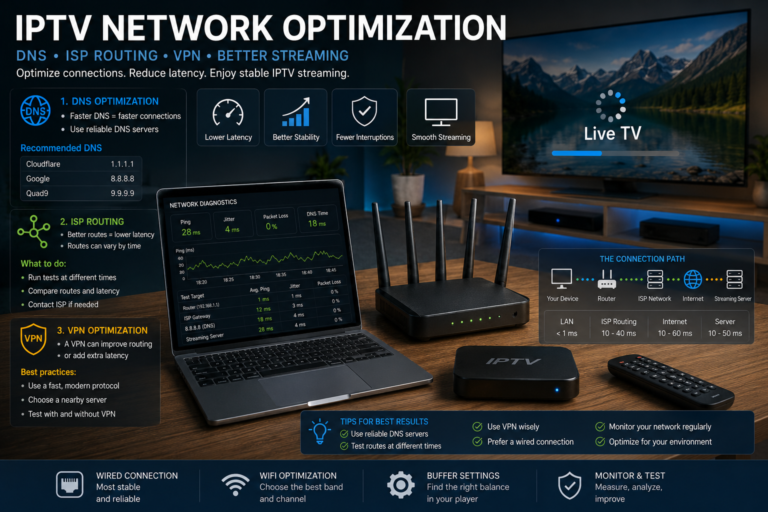
The performance of digital entertainment technology can be affected by bandwidth, latency, network congestion, Wi-Fi coverage, router capabilities, and the quality of the internet service. A connection that works well for browsing may struggle when multiple users stream high-resolution content or participate in demanding online activities at the same time.
Users can improve their entertainment environment by placing routers in suitable locations, reducing unnecessary network congestion, updating network equipment, and using Ethernet when practical. These measures help support digital entertainment technology by creating more stable conditions for connected devices and reducing interruptions during use.
12. Smart Home Integration and Connected Devices
Smart home systems are increasingly connected with digital entertainment technology, creating environments where televisions, speakers, lighting, remote controls, and other compatible devices can work together. These integrations may allow users to manage entertainment through centralized controls, voice commands, or automated routines.
For example, some smart home systems allow compatible lights to dim when a television is turned on or enable speakers to play audio in multiple rooms. These features can make digital entertainment technology more convenient by reducing the need to control each device separately.
Compatibility remains an important consideration. Devices may use different communication standards, applications, operating systems, or control ecosystems. Before purchasing smart home equipment, users should verify whether it works with their existing television, mobile devices, and automation system. Careful planning can make digital entertainment technology easier to manage as the number of connected devices increases.
13. Accessibility and Inclusive Entertainment
Accessibility is an important part of digital entertainment technology because digital media should be usable by people with different needs, abilities, and preferences. Modern devices and applications may include subtitles, captions, screen readers, voice control, audio descriptions, adjustable text sizes, simplified interfaces, and alternative control methods.
These accessibility features help make digital entertainment technology more inclusive. Captions can support viewers who are deaf or hard of hearing, while audio descriptions may help people with visual impairments understand important visual information in movies or television programs. Voice controls and simplified navigation can also help users interact with devices more comfortably.
Accessibility features vary between applications, devices, and content providers. Users should explore the accessibility settings available on their equipment to find features that support their preferred viewing experience. Continued development in digital entertainment technology can improve usability by making accessibility options easier to discover, configure, and apply consistently.
14. Privacy, Security, and Digital Media
Privacy and security are increasingly important considerations in digital entertainment technology, especially as televisions, speakers, mobile devices, and applications connect to the internet. Connected equipment may collect technical information, account details, preferences, diagnostic data, or usage information depending on its settings and policies.
Protecting privacy within digital entertainment technology begins with understanding device settings and reviewing the permissions requested by applications. Users should create strong passwords, enable available security updates, avoid installing applications from unknown sources, and review privacy controls when setting up new equipment.
Connected entertainment devices can also be part of a larger home network, making general network security important. Using secure Wi-Fi settings, maintaining updated router software, and avoiding unnecessary device permissions can reduce some risks. Responsible use of digital entertainment technology includes enjoying convenient features while remaining aware of how personal information and connected devices are managed.
15. Energy Efficiency and Sustainable Entertainment
Energy efficiency is another consideration in digital entertainment technology, particularly as households use multiple televisions, gaming systems, computers, speakers, and connected devices. The power consumption of equipment varies according to its size, features, usage, and operating conditions.
Some modern digital entertainment technology products include energy-saving settings, automatic brightness adjustment, sleep timers, standby controls, and low-power operating modes. These features may help reduce unnecessary electricity use when equipment is not actively being used.
Consumers can also make practical choices by switching off unused devices, adjusting display brightness, avoiding unnecessary standby operation where appropriate, and selecting energy-efficient equipment. Sustainable habits can help reduce household energy consumption while maintaining a comfortable entertainment environment.
16. How to Choose the Right Digital Entertainment Devices
Choosing suitable equipment is an important part of digital entertainment technology because different users have different needs, budgets, room sizes, and viewing habits. Some households prioritize large displays and cinematic sound, while others prefer portability, gaming performance, or simple access to applications.
When comparing products, consider the capabilities of digital entertainment technology rather than relying solely on marketing descriptions. Review supported resolutions, operating system updates, application availability, connection options, storage, processing power, audio compatibility, and ease of use.
It is also helpful to consider the equipment you already own. A television may support several useful features without requiring an upgrade, or a simple accessory may provide the functionality you need. A careful comparison can help users make better decisions about digital entertainment technology, avoid unnecessary purchases, and build a system that meets their actual requirements.
17. Future Trends in Digital Entertainment Technology
The future of digital entertainment technology is likely to involve more personalized experiences, connected devices, advanced displays, immersive environments, and intelligent software. Improvements in artificial intelligence may make media discovery more conversational, while new production tools may allow creators to develop interactive content with greater flexibility.
The continued development of digital entertainment technology may also improve the relationship between physical and digital environments. Virtual reality, augmented reality, spatial audio, interactive storytelling, and real-time graphics could introduce additional ways to experience entertainment, education, and creative media.
Connectivity and interoperability will remain important as more devices communicate with each other. Future digital entertainment technology may place greater emphasis on seamless transitions between televisions, mobile devices, computers, audio systems, and immersive equipment. However, progress will also depend on affordability, privacy, accessibility, infrastructure, and the availability of useful content.
Frequently Asked Questions
What is digital entertainment technology?
Digital entertainment technology refers to the hardware, software, digital formats, and network systems used to create, distribute, access, and experience entertainment. Examples include smart TVs, streaming applications, gaming systems, digital audio equipment, mobile media, and virtual reality devices.
How has digital entertainment technology changed television?
Digital entertainment technology has introduced connected televisions, on-demand viewing, digital applications, personalized recommendations, higher resolutions, and interactive features. These developments allow viewers to access entertainment more flexibly than traditional scheduled broadcasting alone.
What devices are used for digital entertainment technology?
Common examples of digital entertainment technology include smart televisions, streaming boxes, smartphones, tablets, computers, gaming consoles, wireless headphones, soundbars, smart speakers, and virtual reality headsets. The available features depend on each device’s specifications and compatibility.
Does digital entertainment technology require high-speed internet?
Not every form of digital entertainment technology requires an internet connection. Offline games, downloaded movies, locally stored music, and physical media can work without continuous connectivity. However, streaming, cloud gaming, online applications, and multiplayer experiences generally require an internet connection.
Is digital entertainment technology suitable for all ages?
Many forms of digital entertainment technology are designed for different age groups, but content suitability depends on the application, platform, and media being accessed. Parental controls, age restrictions, content ratings, and viewing limits can help families manage entertainment experiences.
Why is digital entertainment technology important?
Digital entertainment technology provides greater flexibility, convenience, accessibility, and choice. It allows users to enjoy media on different devices, explore new content, interact with digital environments, and adapt entertainment experiences to their individual preferences.
Conclusion
The evolution of digital entertainment technology continues to change how people watch, listen, play, create, and interact with digital media. Smart televisions, streaming, artificial intelligence, mobile devices, immersive experiences, cloud gaming, and connected audio systems have expanded the possibilities of modern entertainment.
As digital entertainment technology continues to develop, consumers will have access to more sophisticated devices, flexible media experiences, and intelligent features. At the same time, choosing the right equipment requires attention to compatibility, internet connectivity, privacy, accessibility, energy efficiency, and personal needs.
Understanding these trends can help users make informed decisions and take advantage of the technologies available today. Whether upgrading a home entertainment system, exploring new digital experiences, or simply improving everyday viewing, digital entertainment technology offers an expanding range of opportunities for a more connected and convenient entertainment environment.