Digital Media Evolution: 12 Powerful Changes Transforming Modern Entertainment
Introduction
The digital media evolution has transformed how people discover, watch, listen to, share, and interact with entertainment. In the past, audiences depended heavily on television schedules, radio broadcasts, cinema screenings, physical records, and printed publications. Access to entertainment was often determined by location, broadcasting schedules, and the availability of physical media. Today, internet-connected devices and digital platforms have created a more flexible environment where content can be accessed from almost anywhere.
The digital media evolution is not simply about replacing older technologies with newer devices. It represents a fundamental change in how media is created, distributed, stored, consumed, and experienced. Modern entertainment combines software, broadband internet, digital production, cloud infrastructure, smart devices, and interactive technologies to deliver experiences that were difficult to imagine only a few decades ago.
As technology continues to advance, the digital media evolution is shaping consumer expectations, entertainment industries, communication habits, and the future of connected living. Understanding these changes helps explain why modern media is becoming more personalized, accessible, interactive, and integrated into everyday life.
1. The Transition from Traditional Media to Digital Formats
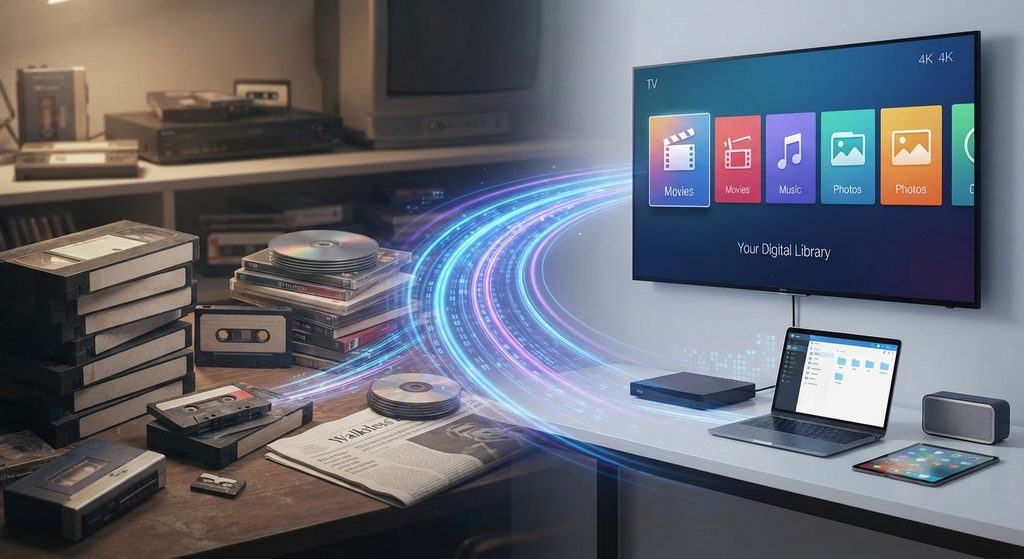
One of the most important milestones in the digital media evolution was the transition from traditional physical formats to digital media. For many years, people relied on VHS tapes, cassette recordings, DVDs, CDs, newspapers, and printed magazines to access information and entertainment. These formats required physical storage, transportation, and dedicated equipment.
Digital formats gradually changed this system by allowing movies, music, photographs, documents, and television programs to be stored electronically. Files could be copied, transferred, organized, and accessed through computers or compatible devices without requiring physical media.
The digital media evolution made entertainment collections easier to manage and more convenient to use. Consumers no longer needed shelves full of discs or tapes to maintain large media libraries. Digital storage also made it possible to access collections through computers, portable devices, and connected televisions.
This transition improved convenience while creating new challenges related to file management, digital preservation, copyright protection, storage capacity, and compatibility. Nevertheless, digital formats became the foundation for many modern entertainment technologies.
2. The Rise of Internet-Based Media Distribution
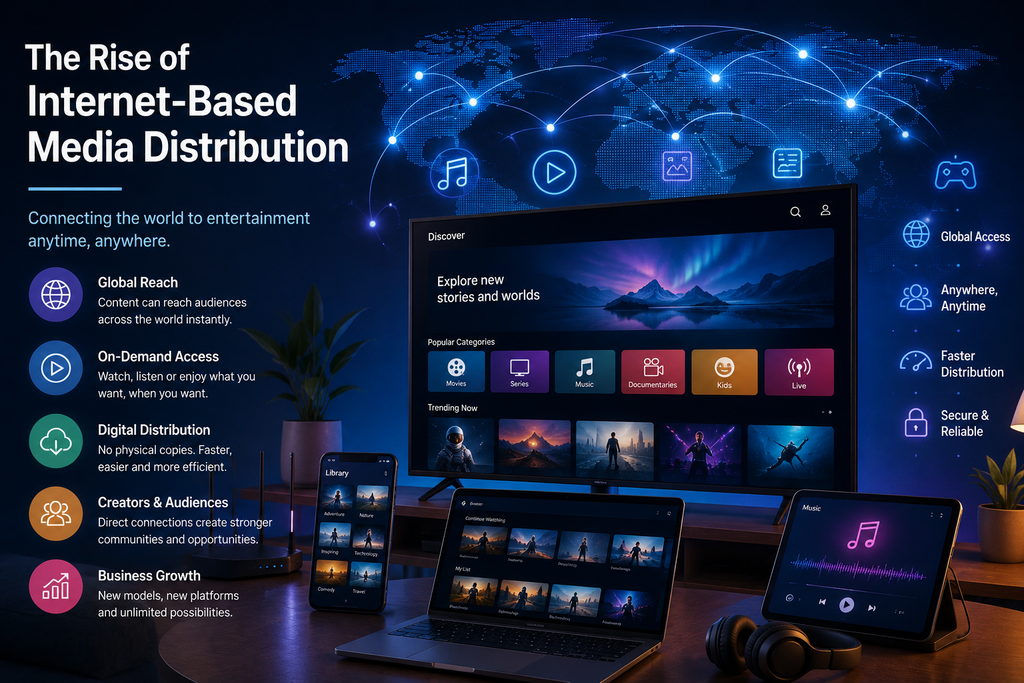
Internet connectivity played a central role in the digital media evolution, allowing media to move beyond traditional broadcasting systems. Previously, television and radio content was delivered through scheduled transmissions, while physical media had to be purchased, borrowed, or rented.
As broadband internet became more widely available, digital distribution offered another way to deliver entertainment. Websites, online video services, music platforms, digital stores, and media applications introduced new methods of accessing content without requiring physical copies.
The digital media evolution made distribution faster and more flexible. Content producers could reach audiences in different countries, while consumers gained more control over when and where they accessed their preferred media.
Internet-based distribution also changed the relationship between content creators and audiences. Instead of depending entirely on traditional broadcasters, creators could publish videos, podcasts, music, and other digital material through online channels.
This transformation continues to influence entertainment businesses, advertising models, subscription services, and the global distribution of digital content.
3. Streaming Technology and On-Demand Entertainment
Streaming is one of the most recognizable developments in the digital media evolution. It allows compatible devices to receive audio and video content over the internet without requiring users to download an entire file before playback begins.
On-demand entertainment introduced greater flexibility by allowing audiences to select content according to their interests and schedules. Instead of waiting for a specific broadcast time, users can browse available movies, programs, documentaries, music, and other media whenever they want.
The digital media evolution has made streaming an important part of everyday entertainment. Smart TVs, computers, tablets, smartphones, and streaming devices can connect to online services and deliver content directly to users.
Streaming technology relies on several systems working together, including content servers, network infrastructure, video compression, buffering, adaptive bitrate technology, and compatible playback software.
Adaptive streaming can adjust video quality according to available bandwidth, helping maintain playback when internet conditions change. This technology contributes to a more flexible viewing experience across different network environments.
As internet infrastructure improves, streaming continues to influence how entertainment is distributed and how consumers expect media services to operate.
4. Smartphones and the Growth of Mobile Media

Mobile devices have become a major part of the digital media evolution because they allow entertainment to move beyond the living room. Smartphones and tablets combine internet access, displays, speakers, cameras, applications, and storage within portable devices.
Consumers can use mobile devices to watch videos, listen to music, read digital publications, follow live events, communicate with friends, and access entertainment while traveling. This flexibility has changed how people use their time and interact with digital content.
The digital media evolution has also encouraged content creators to produce material specifically designed for mobile screens. Vertical videos, short clips, mobile-friendly interfaces, touch controls, and personalized feeds are now common features of digital media.
Mobile devices have made entertainment more accessible in many situations, although the viewing experience depends on screen size, battery life, data availability, internet speed, and device performance.
The growth of mobile media has also created new opportunities for creators, advertisers, businesses, educational organizations, and digital publishers to reach audiences directly.
5. Smart TVs and Connected Home Entertainment
Smart televisions represent another important stage in the digital media evolution. Traditional televisions primarily received signals from broadcast, cable, or satellite systems. Modern smart TVs can connect to home networks, access supported applications, display online content, and interact with other connected devices.
Smart TV technology combines television hardware with operating systems, software applications, network connectivity, and digital interfaces. This allows users to access a variety of entertainment options using a single screen.
The digital media evolution has helped transform televisions into connected entertainment hubs. Users can switch between live broadcasts, on-demand content, online videos, music applications, gaming, and other supported features.
Many modern televisions also include advanced display technologies such as OLED, QLED, Mini-LED, higher resolutions, improved contrast, and enhanced color reproduction. These developments can improve the visual experience when supported by the content and viewing environment.
Smart televisions demonstrate how traditional devices can evolve through software, connectivity, and new media capabilities.
6. Social Media and User-Generated Content
Social platforms have significantly influenced the digital media evolution by giving ordinary users the ability to create and distribute content to large audiences. In the past, producing television programs, films, or professional publications often required specialized equipment, financial resources, and access to established distribution networks.
Today, smartphones, affordable cameras, editing applications, and social platforms make content creation more accessible. Users can record videos, share photographs, publish opinions, create tutorials, stream live broadcasts, and build communities around their interests.
The digital media evolution has blurred the distinction between audiences and creators. People are no longer limited to consuming professionally produced media; they can also participate in creating and distributing entertainment.
User-generated content has introduced new forms of storytelling, online communities, independent journalism, educational videos, product reviews, and creative expression.
However, this growth also creates challenges involving misinformation, privacy, content moderation, copyright, online harassment, and the reliability of information. Digital media literacy has become increasingly important for understanding and evaluating the content people encounter online.
7. Artificial Intelligence and Personalized Media Experiences
Artificial intelligence is becoming a major influence on the digital media evolution. Modern platforms can use machine learning systems to analyze patterns in user interactions, preferences, viewing behavior, searches, and content engagement.
These systems may help recommend videos, movies, music, articles, podcasts, or other material based on previous activity. Personalized recommendations can make large digital libraries easier to navigate by highlighting content that may be relevant to individual users.
The digital media evolution is also changing media production through AI-powered tools. Software can assist with editing, subtitles, translation, audio cleanup, image enhancement, animation, transcription, and other creative tasks.
Some AI systems can generate images, audio, video, text, and visual effects, providing new tools for creators and businesses. These capabilities may reduce the time required for certain production tasks and allow smaller teams to experiment with new ideas.
Despite these advantages, AI in media raises important questions about privacy, transparency, copyright, authenticity, and the use of synthetic content. As these tools become more common, audiences and creators will need to understand both their benefits and limitations.
8. Cloud Computing and Digital Media Storage
Cloud computing has become an important foundation of the digital media evolution because it allows digital services to store and process information using remote infrastructure. Instead of relying entirely on local storage, users and businesses can access certain files, applications, and media libraries through internet-connected systems.
Cloud storage can help users maintain access to photographs, videos, documents, music collections, and other digital files across multiple compatible devices. It can also support synchronization, backup, collaborative editing, and remote access.
The digital media evolution has made cloud-based services increasingly relevant for entertainment and creative industries. Media companies may use cloud infrastructure for content delivery, storage, video processing, collaboration, distribution, and digital asset management.
Cloud technologies can also support gaming, live broadcasting, digital production, and media applications that require scalable infrastructure.
However, cloud-based media depends on network availability, account access, service reliability, privacy practices, and subscription conditions. Users should understand how their information is stored and what happens if a service changes its policies or becomes unavailable.
Cloud computing continues to expand the possibilities of connected media while changing the way digital content is maintained and accessed.
9. High-Resolution Displays and Better Audio Experiences
Visual and audio improvements remain important parts of the digital media evolution. Modern entertainment devices offer higher resolutions, improved display panels, more accurate colors, better contrast, higher refresh rates, and advanced image-processing technologies.
High-resolution displays can provide sharper images when the content, screen size, viewing distance, and hardware support the required resolution. Technologies such as 4K and 8K displays continue to develop, although the practical benefits vary depending on the available content and individual viewing conditions.
The digital media evolution has also improved audio experiences through wireless headphones, soundbars, surround-sound systems, spatial audio, noise reduction, and more efficient audio formats.
These improvements can create more immersive viewing and listening environments. For example, a compatible home theater system may provide clearer dialogue, better separation between audio channels, and a stronger sense of depth.
The quality of an entertainment experience depends on the entire system, including the media source, device capabilities, connection quality, audio settings, room acoustics, and personal preferences.
Display and audio technologies will continue to evolve as manufacturers introduce new hardware and software improvements.
10. Interactive Entertainment and Video Gaming
Gaming has become a major part of the digital media evolution, transforming entertainment from passive viewing into interactive experiences. Traditional television and cinema allow audiences to follow a story, but video games give players the ability to make decisions, control characters, explore environments, and influence outcomes.
Modern gaming combines graphics, sound, storytelling, artificial intelligence, online communication, and multiplayer interaction. Games can offer realistic simulations, creative environments, competitive experiences, and collaborative activities.
The digital media evolution has also changed how games are distributed. Digital storefronts, downloadable updates, online multiplayer systems, cloud saves, and subscription-based libraries have become common features in many gaming environments.
Gaming communities can connect people across different locations, allowing them to participate in shared experiences. Live streaming and gaming content have also created new forms of entertainment in which audiences watch others play, learn strategies, and interact with creators.
As hardware and software improve, gaming continues to overlap with film, music, social media, education, and virtual experiences.
11. Virtual Reality and Augmented Reality
Virtual reality and augmented reality represent emerging possibilities in the digital media evolution. Virtual reality uses specialized headsets to create simulated environments that users can explore through movement and interaction.
Augmented reality adds digital elements to views of the real world, often through smartphones, tablets, or specialized devices. These experiences may include interactive graphics, information overlays, visual effects, educational tools, and entertainment features.
The digital media evolution could make immersive technologies more relevant to gaming, training, tourism, education, live events, design, and storytelling.
Virtual environments may allow users to explore locations, attend simulated events, interact with digital objects, or participate in experiences that would otherwise be difficult to access.
Although VR and AR technologies continue to improve, adoption still depends on device costs, comfort, battery life, software availability, accessibility, performance, and practical usefulness.
Future improvements in displays, sensors, processing power, and interaction methods may help these technologies become more convenient and widely used.
12. The Future of Digital Media Evolution
The future of the digital media evolution will likely involve greater integration between devices, services, artificial intelligence, connectivity, and immersive experiences. Digital entertainment is already becoming more flexible, personalized, and interactive, and these trends are expected to continue.
Future smart devices may offer improved voice control, automated recommendations, better accessibility features, enhanced media search, and more seamless communication between household technologies.
The digital media evolution may also create new forms of entertainment that combine traditional video, gaming, interactive storytelling, live events, virtual environments, and AI-assisted content creation.
Faster internet connections and more advanced infrastructure could improve the availability of high-quality media, reduce certain technical limitations, and support more connected experiences.
At the same time, future development will need to address privacy, security, digital accessibility, energy consumption, content authenticity, and the responsible use of emerging technologies.
The most successful media technologies will not necessarily be the most complicated. They will be the ones that make entertainment easier to access, more enjoyable to use, more reliable, and more useful for different audiences.
Frequently Asked Questions
What does digital media evolution mean?
The digital media evolution describes how entertainment, communication, and information have changed through digital formats, internet connectivity, software, mobile devices, cloud computing, and interactive technologies.
How has digital media changed entertainment?
The digital media evolution has made entertainment more accessible and flexible. Consumers can access digital content through compatible devices, select what they want to watch, and enjoy media across different locations instead of depending entirely on traditional schedules or physical formats.
What technologies are driving digital media evolution?
Major technologies include broadband internet, streaming, smartphones, smart TVs, cloud computing, artificial intelligence, digital storage, high-resolution displays, gaming systems, virtual reality, and augmented reality.
Is digital entertainment replacing traditional media?
The digital media evolution is changing traditional media rather than eliminating every older format. Television broadcasts, radio, cinema, physical media, and printed publications continue to exist, while digital technologies offer additional ways to create, distribute, and consume content.
What is the next stage of digital media evolution?
Future developments may include more intelligent media recommendations, immersive entertainment, improved cloud services, advanced interactive experiences, more connected devices, and new tools for digital content creation.
Conclusion
The digital media evolution has changed nearly every aspect of modern entertainment, from the way content is produced and distributed to the way audiences discover and enjoy it. Traditional television, radio, physical recordings, and printed media laid the foundation for the digital transformation that followed.
Streaming, smart TVs, mobile devices, cloud computing, artificial intelligence, social media, gaming, and immersive technologies have created a more connected entertainment environment. These innovations offer greater flexibility, convenience, and opportunities for creativity while introducing new technical and social challenges.
As technology continues to advance, the digital media evolution will keep shaping the future of entertainment. Understanding its major developments helps consumers make informed decisions, adapt to new technologies, and explore the growing possibilities of modern digital media.